
💡 Executive Summary / Key Takeaways
Across the global personal care hardware supply chain, foot bath appliances have reached an engineering ceiling of incremental feature bloat (PTC precision heating, motorized 3D rollers, UV-C sterilizers, and IoT connectivity), while remaining trapped in a single-purchase price band ($35 to $80). Meanwhile, a high-profile media investigation exposed that 100% of tested popular herbal foot soak bags contained severe fungal contamination—exceeding cosmetic safety microbial limits by up to 160 times—creating an alarming brand liability for hardware manufacturers who bundle them as free gifts. MUQI Technology proposes transforming commoditized foot spa appliances into a "Razor & Blades" continuous revenue engine powered by solid-state hydrogen consumables. Requiring zero electrical modification and zero retooling, solid-state hydrogen dissolves instantly to deliver 1200+ ppb pure molecular hydrogen, pristine micro-nano bubbles, and verifiable transdermal absorption science (Iwai et al. 2023 pig study), unlocking $45 to $120 in recurring annual consumable gross margin per active machine.
1. Prelude: The Hardware Deadlock & The 3·15 Hygiene Wake-Up Call
In recent consumer electronics and e-commerce shopping festivals, the global foot bath and home spa category witnessed an intense wave of feature escalation. Product specification sheets have expanded relentlessly: from primitive single-stage heating elements to microcomputer PID temperature control, 3D biomimetic motorized kneading rollers, high-output circulation pumps, dual-band UV sterilization, and smart home application synchronization.
Yet, mainstream market transaction prices remain rigidly compressed between $35 and $80 (RMB 259 to 599). For hardware manufacturers and brand aggregators, this has devolved into a punishing one-time transaction: escalating BOM costs, razor-thin operating margins, and zero subsequent commercial connection once the box leaves the warehouse.
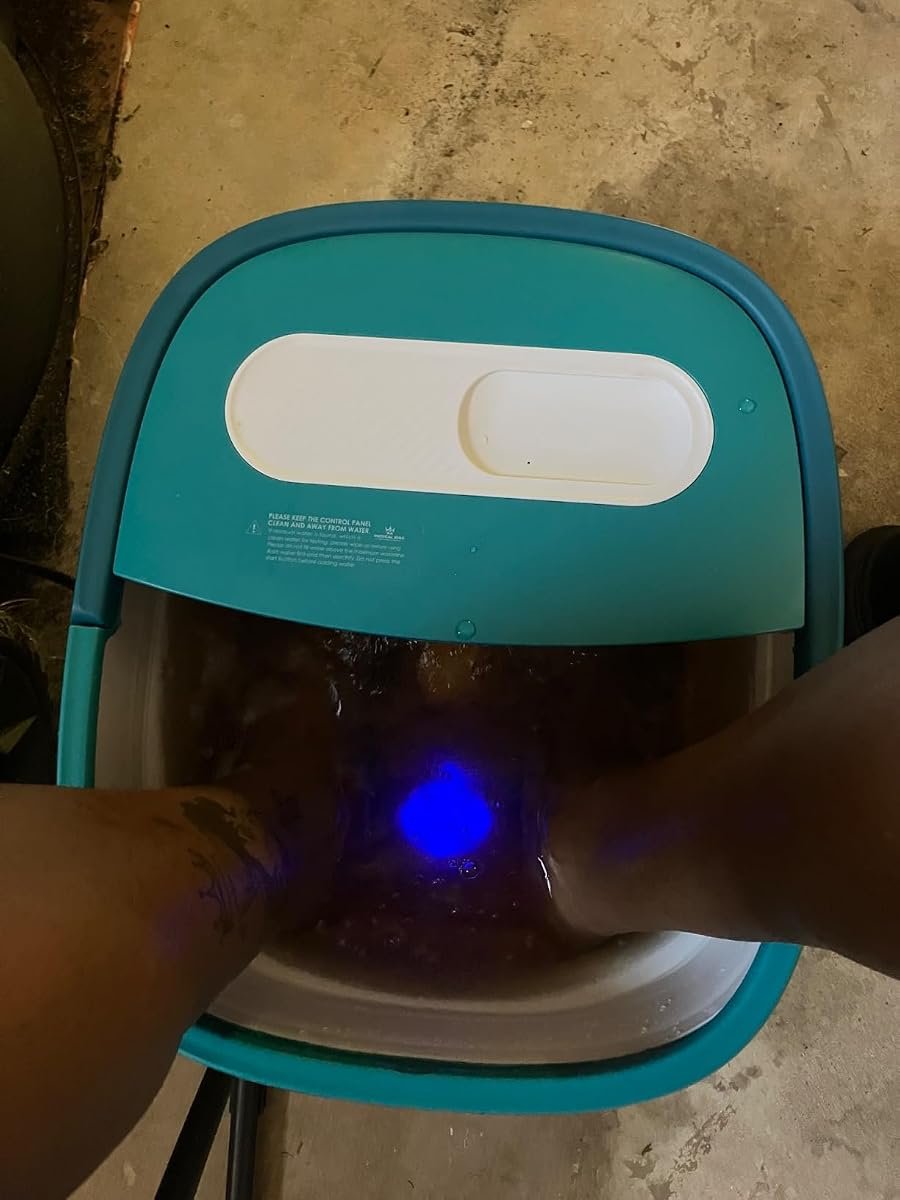
To incentivize checkout conversion, most appliance brands bundle complimentary non-woven herbal foot soak bags inside the packaging carton. However, an exhaustive undercover investigation jointly conducted by major investigative media (The Paper / 澎湃新闻) and independent testing lab "Daddy Lab" on nine best-selling e-commerce foot soak bags delivered a shockwave to the industry:
- 100% Contamination Rate: Every single one of the 9 tested product batches contained excessive fungal and mold counts;
- 160x Microbial Overrun: Colony-forming units (CFU) in certain batches exceeded the microbial safety ceiling of the official Safety and Technical Standards for Cosmetics by an astonishing 160 times;
- Industrial Impurities: Multiple samples were found to contain dirt clods, cigarette butts, and dyed substitute botanicals masquerading as genuine herbs.
This stark divergence defines the current category reality: on one side, high-precision, technologically sophisticated foot bath hardware; on the other, raw material failures, unhygienic filling workshops, and a regulatory vacuum on the consumable side.
This whitepaper is written for corporate leaders, OEM/ODM factory owners, cross-border e-commerce brand directors, and wellness spa operators:
- The trust collapse of traditional herbal bags eliminates reputation risks for hardware brands while opening a massive, high-margin vacuum for pristine, scientifically grounded consumables;
- Global wellness giants on Amazon (such as HoMedics and Renpho) have already proven the immense commercial lifetime value of the Razor & Blades business model through high-frequency mineral salts and effervescent soaks;
- Solid-State Hydrogen Consumables represent the definitive breakthrough medium: offering zero electrical modification, zero residue or mold, objectively verifiable ppb concentrations, and peer-reviewed transdermal absorption evidence.
2. The Three Cracks in the Traditional Foot Soak Sector
When consumers submerge their feet into warm water, their sensory perception is immediate and unforgiving. The reason traditional herbal foot soak bags face escalating consumer backlash lies in three systemic structural cracks across the supply chain.
2.1 Crack 1: The Hygiene & Quality Trust Shock
Undercover investigative reporting across major OEM processing belts (such as Bozhou, Anhui and Nanyang, Henan) exposed that contract manufacturing prices for traditional foot soak bags had been ruthlessly compressed to $0.70–$1.10 (RMB 5–8) per 30-bag pack. Under such brutal cost pressures, automated sterilization, dust-free cleanrooms, and microbial monitoring are entirely discarded.
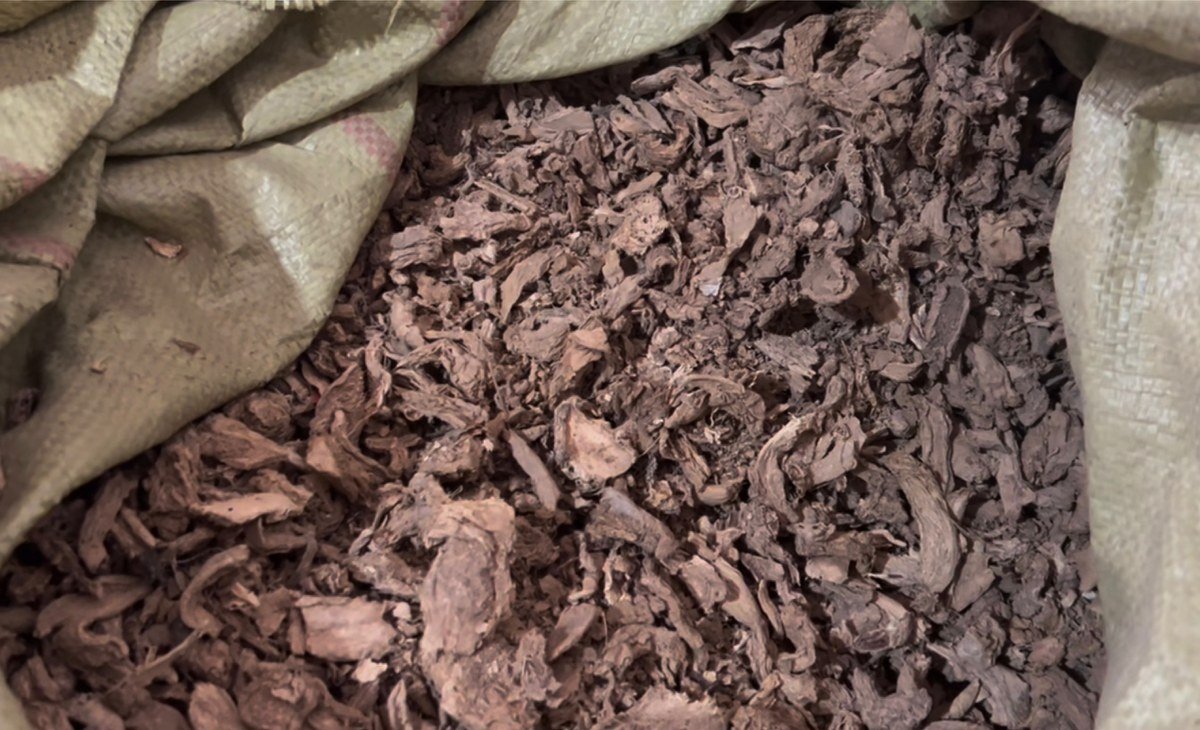
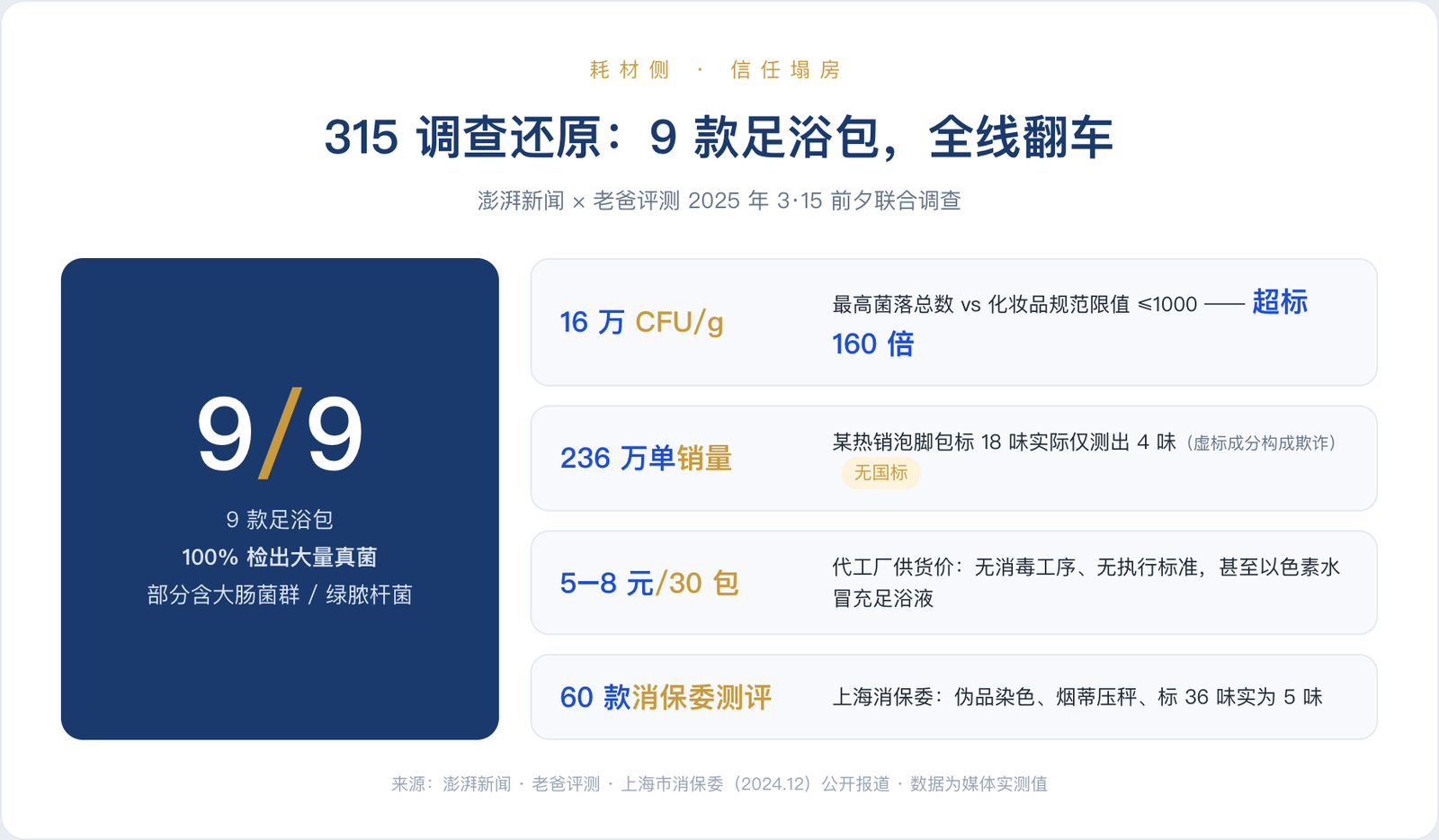
Data Context Note: The above findings originate from investigative sampling conducted by independent media and testing laboratories on select commercial batches, rather than a nationwide mandatory government regulatory recall. Nevertheless, the underlying supply chain reality serves as an urgent alert: continuing to bundle low-quality herbal bags as complimentary gifts poses severe collateral damage to the host hardware brand's reputation.
When consumers cut open a traditional herbal bag, they are confronted with murky residue, floating dust, and the lingering threat of mold. After soaking, they must scrub stubborn botanical stains from the tub walls and clear clogged drainage filters. This poor user experience terminates any impulse for repeat replenishment.
2.2 Crack 2: The Regulatory Vacuum of Category Standards
A critical industry reality often overlooked is that many major markets, including China, currently lack a dedicated, mandatory National Standard (GB) specifically governing "Foot Bath Consumables / Soak Powders."

In product disputes, regulatory oversight currently relies on indirect benchmarks such as general Product Quality Laws, cosmetic microbial limits, or advertising statutes. In the absence of strict category-entry criteria, inferior products frequently undercut quality formulations. For forward-looking hardware brands, however, the absence of a rigid standard is a prime first-mover opportunity: the first brand to deliver consumables backed by registered Enterprise Standards, ISO compliance, and comprehensive third-party SGS toxicology testing will capture category leadership.
2.3 Crack 3: The Value Chain Disconnect Between Hardware & Consumables
Within the legacy wellness appliance ecosystem, appliance factories only manufacture tubs, while herbal packagers chase bulk volume. They operate in complete commercial isolation:
- Appliance Manufacturers: Suffer from an inability to monetize hardware post-sale, trapped in repetitive price wars over minor feature iterations;
- Consumable Packagers: Trapped in low-cost e-commerce race-to-the-bottom dynamics, incapable of leveraging premium hardware to cultivate durable brand equity.
This structural fissure is precisely where high-technology consumables create their strategic entry point.
3. Market Precedent: The Razor & Blades Consumable Flywheel on Amazon
Examining mature Western e-commerce ecosystems reveals a dramatically different industrial paradigm.
3.1 The Amazon Consumable Flywheel
Across North American and European markets, foot spas and hydrotherapy baths have long transcended isolated hardware transactions, functioning instead as deeply integrated consumption ecosystems:
| Commercial Dimension | Mature Western Markets (Amazon, Target, etc.) | Conventional Domestic Foot Bath Sector |
|---|---|---|
| Core Business Model | Hardware Entrypoint + High-Frequency Replenishment (Razor & Blades) | One-off hardware sale dependent on slim equipment gross margin |
| Dominant Consumables | Epsom Salts, Effervescent Tablets, Essential Oil Bath Bombs | Low-cost non-woven herbal bags, highly commoditized |
| Category Market Scale | Global Epsom Salt Market projected at $2.82B by 2026, CAGR 9.26% [Mordor] | Lack of independent statistics for high-tech foot bath consumables |
| Novel Hydrogen Formats | Commercialized solid-state tablets (H2RICH, Molecular H2TAB, etc.) | Largely theoretical; lack of integrated hardware-consumable co-development |
Global wellness brand operators understand an immutable commercial rule: the foot tub is a one-time purchase, but the active compounds infused into the water represent continuous, high-margin consumable demand. After purchasing a $40 to $80 foot bath, consumers routinely allocate $15 to $30 monthly to replenish specialized therapeutic salts and effervescent tablets.
3.2 Molecular Hydrogen Consumables Have Left the Laboratory
A search on Amazon for "Hydrogen Foot Bath" reveals that next-generation effervescent hydrogen foot soak tablets, typified by brands like H2RICH, are already actively marketed. Product specifications explicitly highlight single-tablet dissolved molecular hydrogen outputs exceeding 1200 ppb, utilizing individual aluminum foil hermetic blister packaging infused with botanical aromatherapeutic extracts.
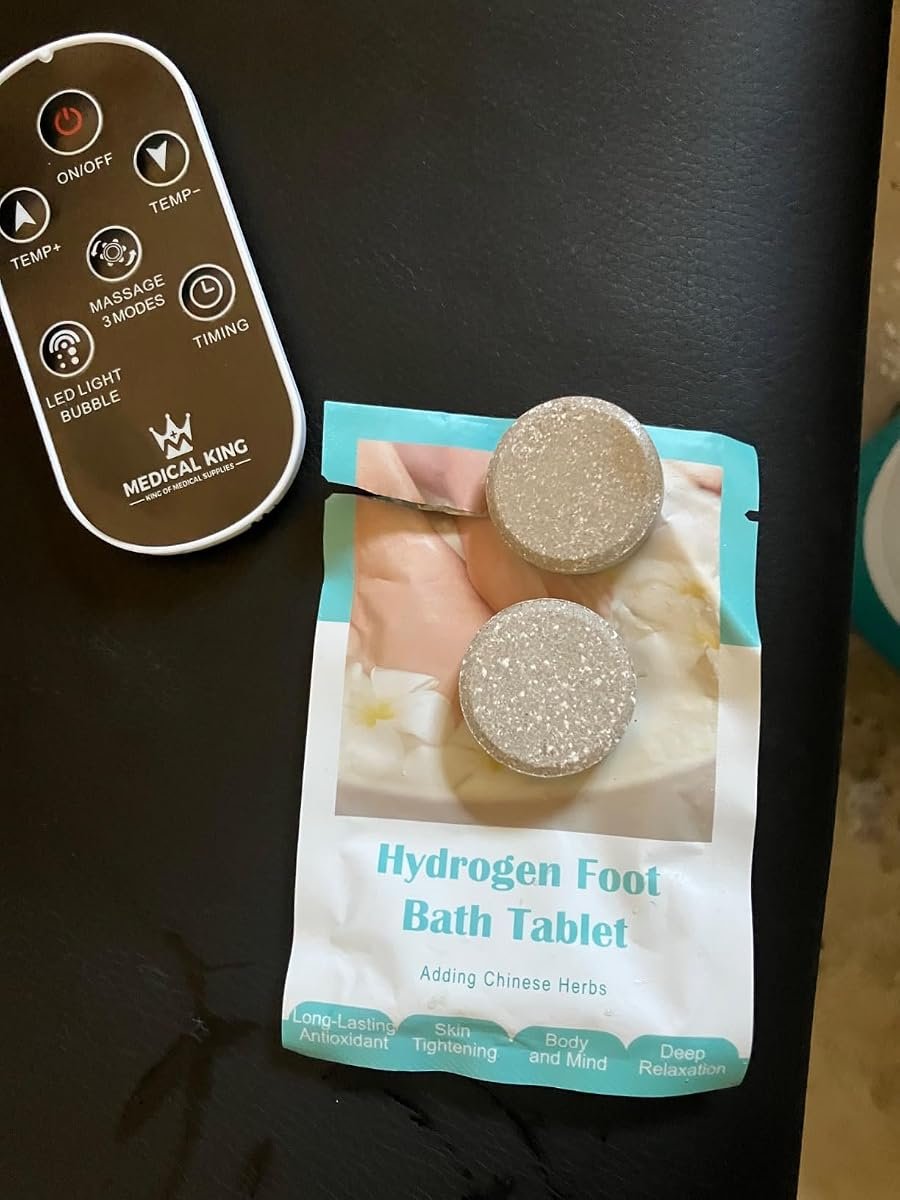
Reading Disclosure: The "1200 ppb hydrogen concentration" is derived from brand marketing disclosures on public product pages and has not been verified by independent regulatory sampling. Nonetheless, it broadcasts an unequivocal industry signal: tablet-form hydrogen consumables with measurable concentrations have already achieved commercial viability in sophisticated retail channels.
4. Core Breakthrough: Why Solid-State Hydrogen is the Ultimate Consumable Medium
Among all potential alternatives to traditional herbal bags, why is solid-state hydrogen (Solid-State H₂) universally recognized as the most viable technical and commercial vehicle?
4.1 Scientific Mechanism: Empirical Evidence for Transdermal Absorption
Molecular hydrogen (H₂) is the smallest, lightest molecule in nature (molecular weight: 2 Da). In recent years, physiological research into hydrogen-rich water immersion has advanced significantly:
- Animal Model Empirical Findings: Groundbreaking research led by Japanese scientist Iwai et al. (2023, Arch Med Sci Civil Dis) utilized a porcine immersion model to investigate transdermal hydrogen kinetics. Following a 20-minute soak in saturated hydrogen water, dissolved H₂ concentration in the inferior vena cava blood of the subjects rose dramatically from baseline ~0.7 ppb to ~46 ppb. This study provided direct physiological proof that molecular hydrogen permeates epidermal barriers and enters systemic microcirculation.
- Selective Antioxidant & Microcirculation Mechanisms: Extensive peer-reviewed literature explores the capability of molecular hydrogen to selectively neutralize cytotoxic hydroxyl radicals (•OH) while supporting peripheral capillary perfusion and soothing thermal relaxation.
Scientific Boundary Disclaimer: The cited studies are drawn from open academic literature for biological exploration. Transdermal immersion represents a localized topical pathway distinct from direct gas inhalation or oral ingestion, and does not constitute a therapeutic promise or medical treatment claim for any clinical pathology.
4.2 Engineering Feasibility: Zero Electrical Modification Advantage
Achieving a "hydrogen-infused foot bath experience" involves two fundamentally divergent engineering paths:
| Evaluation Dimension | Built-in Electrolytic Foot Tub (Internal SPE/PEM) | Solid-State Hydrogen Consumables (External In-Water Tablet) |
|---|---|---|
| Appliance Engineering & Tooling | Requires ground-up redesign for water-electricity isolation, PEM cell, electrodes | Zero electrical modification; instantly compatible with 100% of existing models |
| Retail Unit Pricing | High internal BOM drives retail prices to $300 - $1,000+ | Maintains competitive hardware pricing ($35-$80); minimal consumer friction |
| Compliance & Certification Burden | Electrolysis under high water volume, scaling risks; invalidates existing CE/UL/CB/3C | Zero electrical risk; compliance strictly governed by materials safety & toxicology |
| Commercial Lifecycle LTV | One-time sale; long appliance durability locks brand out of further revenue | High-frequency replenishment; builds predictable, recurring wellness subscription revenue |
For appliance manufacturers equipped with mature injection tooling and assembly lines, adopting solid-state hydrogen consumables means adding an advanced technological selling proposition without spending a single dollar on line retrofitting or tooling overhaul.
4.3 Sensory Experience: Cleanliness & Objectively Measurable PPB
Traditional herbal bags rely on opaque brown water and medicinal odors for psychological reassurance. In contrast, solid-state hydrogen delivers an unmatched, transparent sensory upgrade:
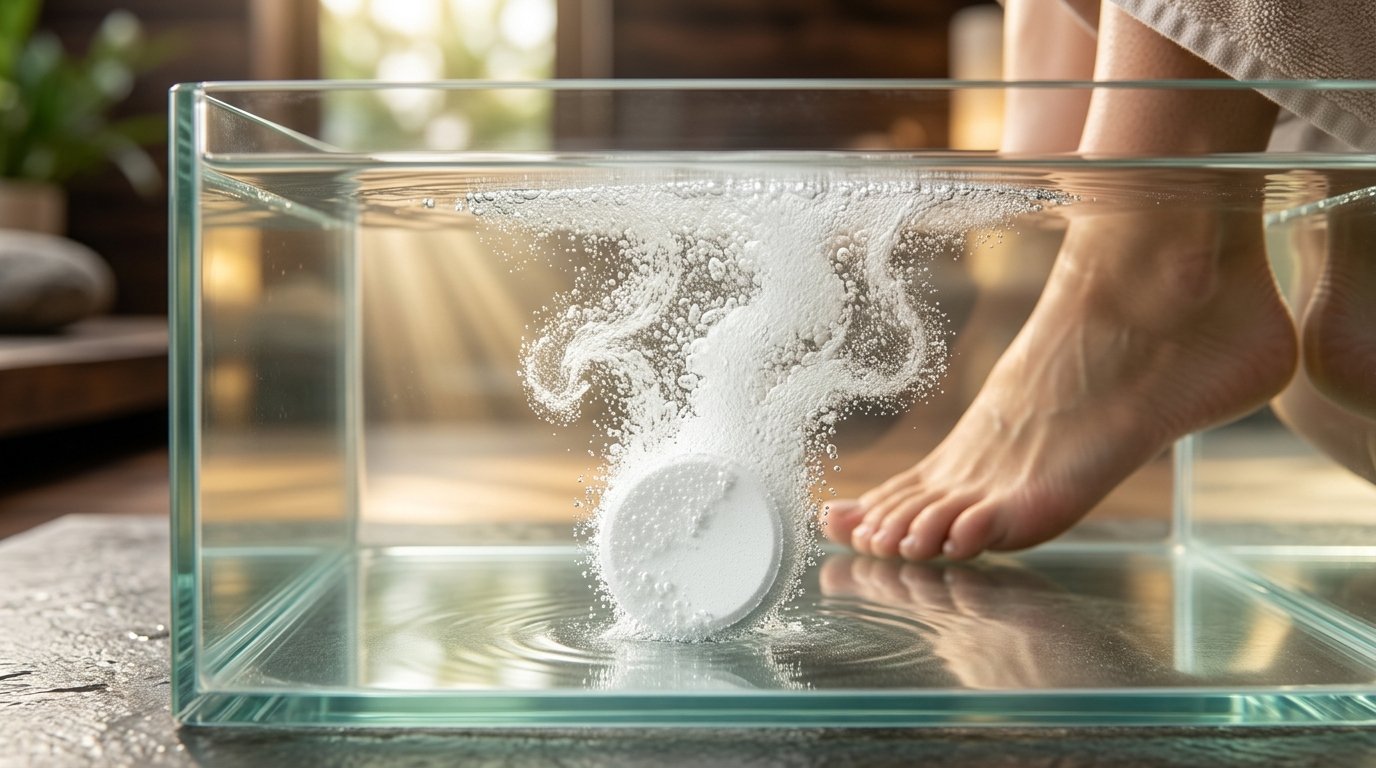
When dropped into warm water, the pristine white tablet effervesces within seconds, releasing tens of thousands of silky micro-nano hydrogen bubbles. The bath water remains crystal-clear, soft, and pristine, leaving zero stains on appliance walls and zero particulates to choke drainage valves.
Crucially, dissolved hydrogen concentration (ppb) is an exact physical parameter measurable on-site with calibrated dissolved hydrogen meters or gas chromatography. It can be independently verified by third-party testing agencies and demonstrated to consumers live. This data-driven certainty forms an impenetrable moat against skepticism.
5. Four Product Concepts Reimagining the Next-Gen Foot Bath
Leveraging solid-state hydrogen chemistry, MUQI Tech has engineered four commercialization concepts designed to deliver visual impact and business viability:
5.1 Concept 1: The Modular Consumable Capsule Chamber
To anchor the consumable as an indispensable, integrated component of the appliance, we created the "Drawer/Magnetic Hydrogen Active Capsule Chamber":
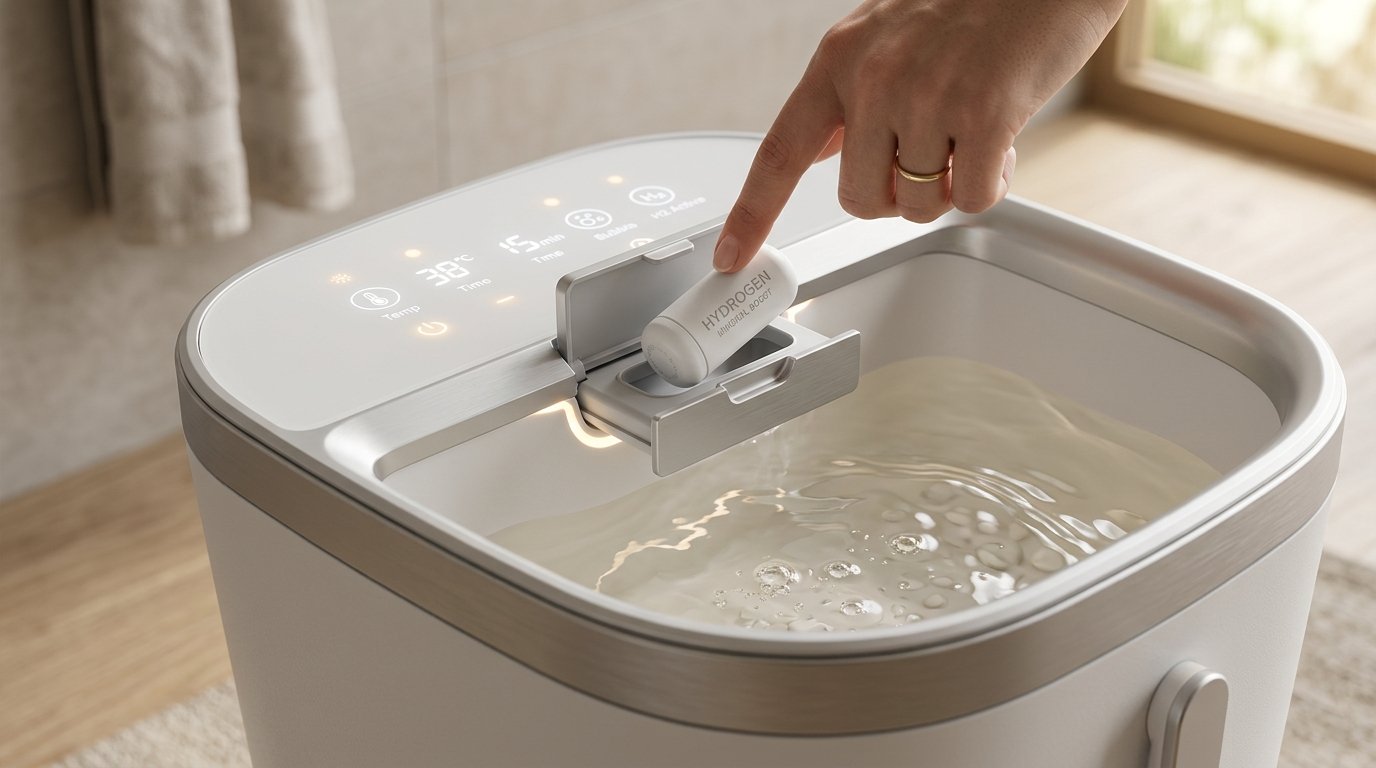
- Ritualistic Interaction: A push-to-eject micro-chamber integrated along the top rim. After filling the tub with warm water, the user inserts a solid-state hydrogen capsule into the chamber;
- Controlled Fluidic Dispersion: Perforated directional vents and micro-circulation channeling allow internal water flow to wash over the capsule at a calibrated rate, dispersing dissolved hydrogen evenly throughout the tub;
- Proprietary Consumable Lock-In: Proprietary capsule geometry naturally secures long-term replenishment orders for original-equipment consumables, insulating the brand from generic copycats.
5.2 Concept 2: High-Purity Micro-Nano Hydrogen Effervescent Tablets
For existing market inventory (requiring zero modifications to current hardware), we developed standardized, rapid-dissolving high-purity hydrogen tablets. A single tablet in 10 to 15 liters of warm water sustainably releases 1200+ ppb of dissolved molecular hydrogen within 3 to 5 minutes, producing an eye-catching "hydrogen milk bath" effervescent texture.
5.3 Concept 3: Dual-Layer Herbal & Hydrogen Hybrid Tablets
Recognizing the deep-rooted consumer affinity for traditional botanical care, our second-generation formulation utilizes dual-layer co-compression technology:
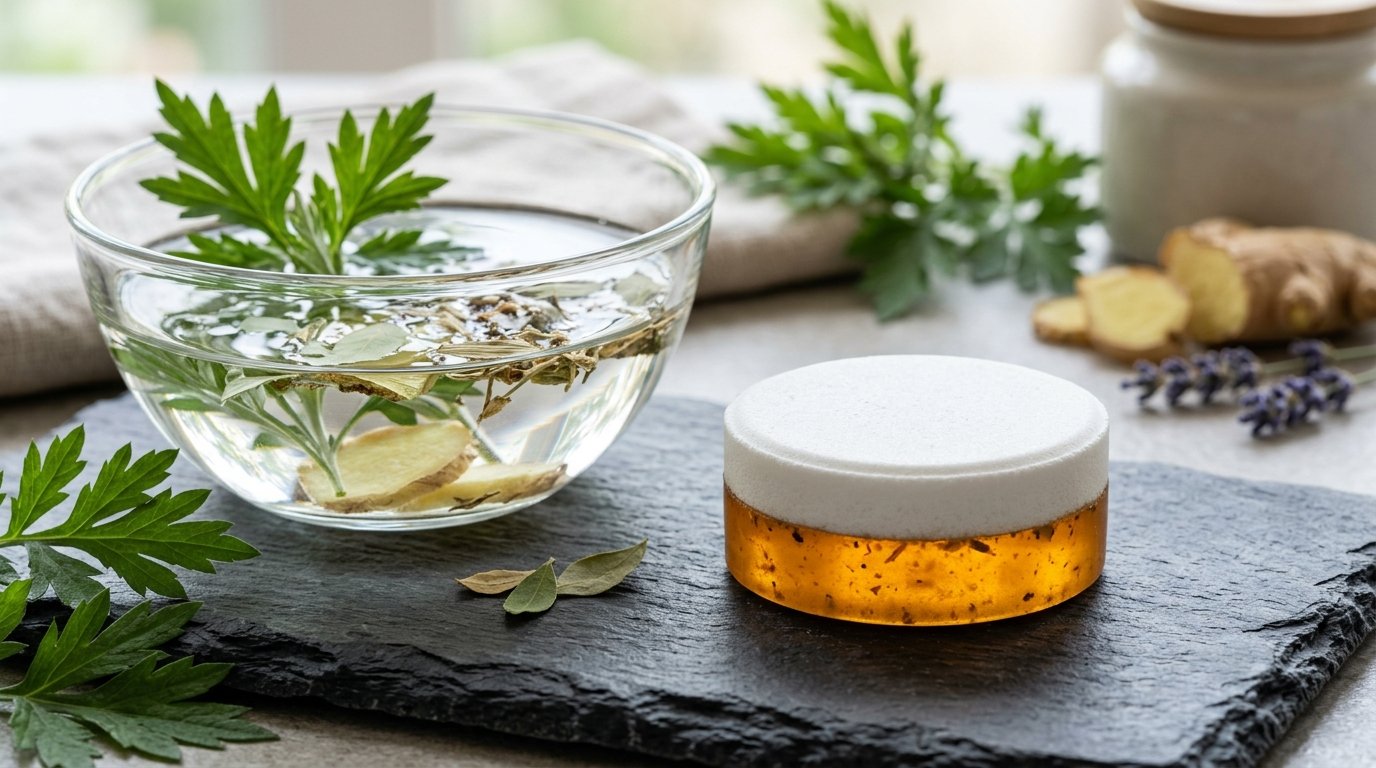
- Upper Layer (Pure White Hydrogen Storage Layer): High-purity microcrystalline hydrogen substrate, dedicated to the sustained release of dissolved H₂;
- Lower Layer (Amber Herbal Extract Layer): Selected botanical extracts (Mugwort, Ginger, Saffron) refined via micro-powder vacuum filtration, hydrolyzing completely without leaving any particulate sediment.
Both layers dissociate simultaneously: micro-bubbles churn above while subtle botanical hues and natural aromas disperse below—fulfilling traditional aroma preferences while eliminating mold, debris, and cleaning hassles.
5.4 Concept 4: 4-Tier Consumable Product Line Matrix
We advise appliance brands not to launch a single isolated SKU, but to deploy a structured consumable matrix across price points and demographics:
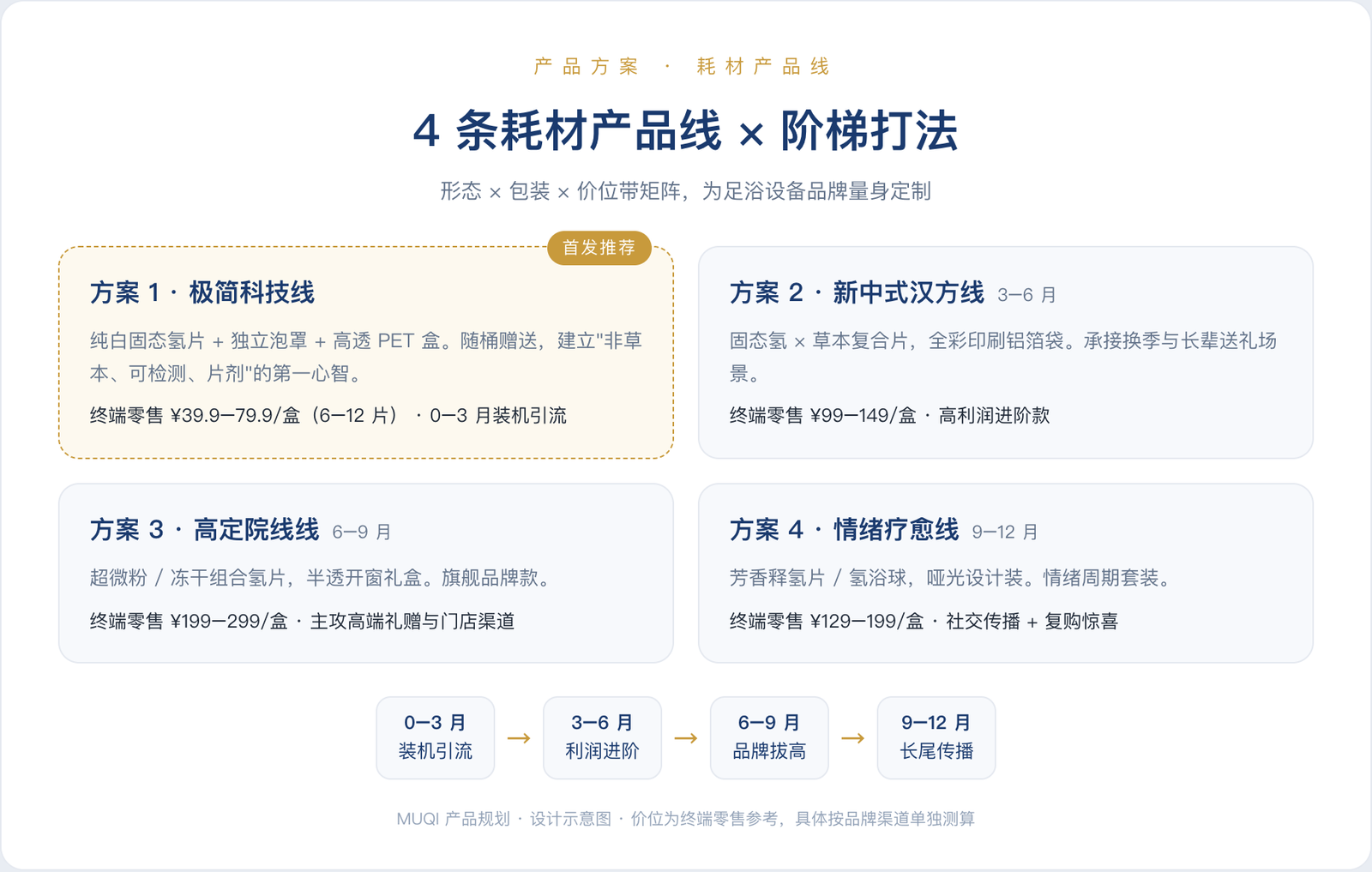
- Minimalist Tech Line (In-Box Acquisition · Months 0–3):
- Format: Pure white micro-bubble tablets in transparent blister packs;
- Positioning: 6–12 tablet trial pack bundled with hardware; retail replenishment at $6.99–$11.99 per box (10–20 tablets);
- Objective: Drive effortless habitual adoption of adding hydrogen to every foot soak.
- Modern Botanical Line (Core Profit Driver · Months 3–6):
- Format: Dual-layer hybrid tablets (Mugwort, Old Ginger, Saffron);
- Positioning: Matte metallic foil carton; retail replenishment at $14.99–$22.99 per box;
- Objective: Target seasonal wellness, gifting, and deep recovery rituals.
- Clinical / MedSpa Line (Flagship Benchmark · Months 6–9):
- Format: Lyophilized bioactive micro-powder + ultra-strength hydrogen tablet sets;
- Positioning: Hard-box gift sets; retail at $29.99–$45.99 per set;
- Objective: Tailored for luxury spas, aesthetic clinics, and corporate executive wellness perks.
- Aromatherapy / Emotional Healing Line (Lifestyle Expansion · Months 9–12):
- Format: Hydrogen bath balls infused with therapeutic lavender and bergamot essential oils;
- Positioning: Morandi gift sets; retail at $19.99–$29.99 per set;
- Objective: Expand to social media gifting, sleep optimization, and young female demographics.
6. Strategic B2B Co-Building: What MUQI Tech Delivers
From initial material formulation to strategic partnership with global appliance manufacturers, MUQI Tech operates with absolute clarity on its B2B supply chain mission.
6.1 Strategic Clarity: B2B Enabler, Not C-End Competitor
In our early phases, we evaluated launching direct-to-consumer (D2C) brands via social commerce channels. However, rigorous strategic analysis led us to a firm commitment:
- Pure materials research and contract manufacturing enterprises create channel conflict and operational friction when attempting to capture consumer retail traffic;
- Over-aggressive retail marketing in consumer health frequently leads to non-compliant cure-all claims that undermine industry integrity.
Consequently, MUQI Tech established its core doctrine: MUQI never competes with appliance brands for consumer traffic; we serve as the unshakeable "Materials Foundation and Quality Hub" behind our brand partners.
6.2 15-Year R&D Foundation and Patent Portfolio
Established in 2011, MUQI Tech has dedicated over 15 years to functional mineral ceramics and solid-state hydrogen technologies:
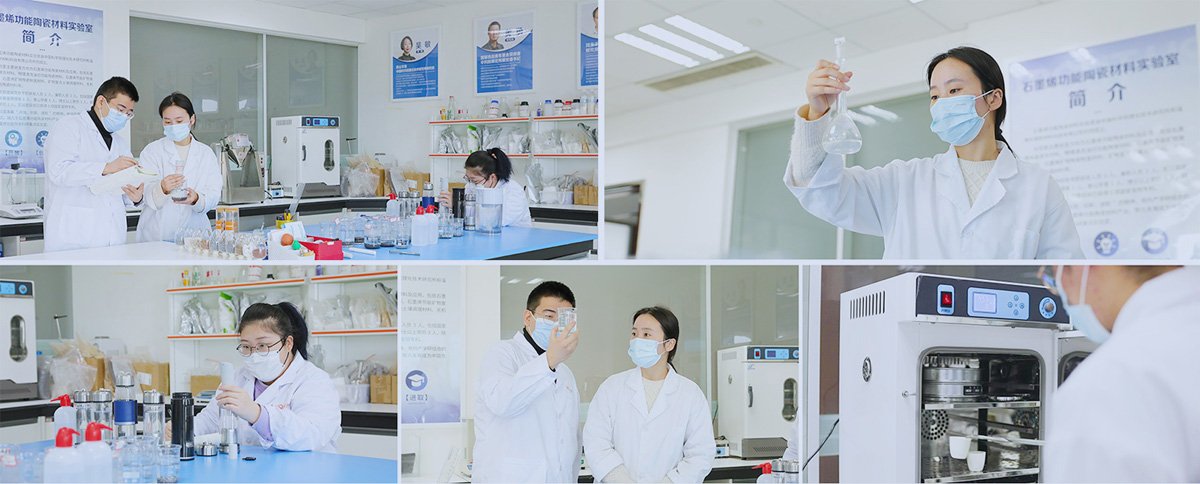
- National Research Facilities: Home to China's first dedicated solid-state hydrogen materials research facility, backed by 15 authorized national invention patents;
- Extensive Global Track Record: Over 1,800 corporate clients worldwide supplied with functional media, core components, and OEM solutions;
- Integrated Botanical Extraction: Co-developed with Muyi Bio to combine verified origin botanicals with solid-state hydrogen crystal lattices;
- Regulatory & Standard Support: Full delivery of Enterprise Standard registrations, SGS non-irritation skin safety reports, and calibrated dissolved hydrogen release curves.
6.3 Tripartite Value Allocation & Economic Model
The business model is straightforward: "Hardware serves as the user gateway; consumables deliver continuous cash flow."
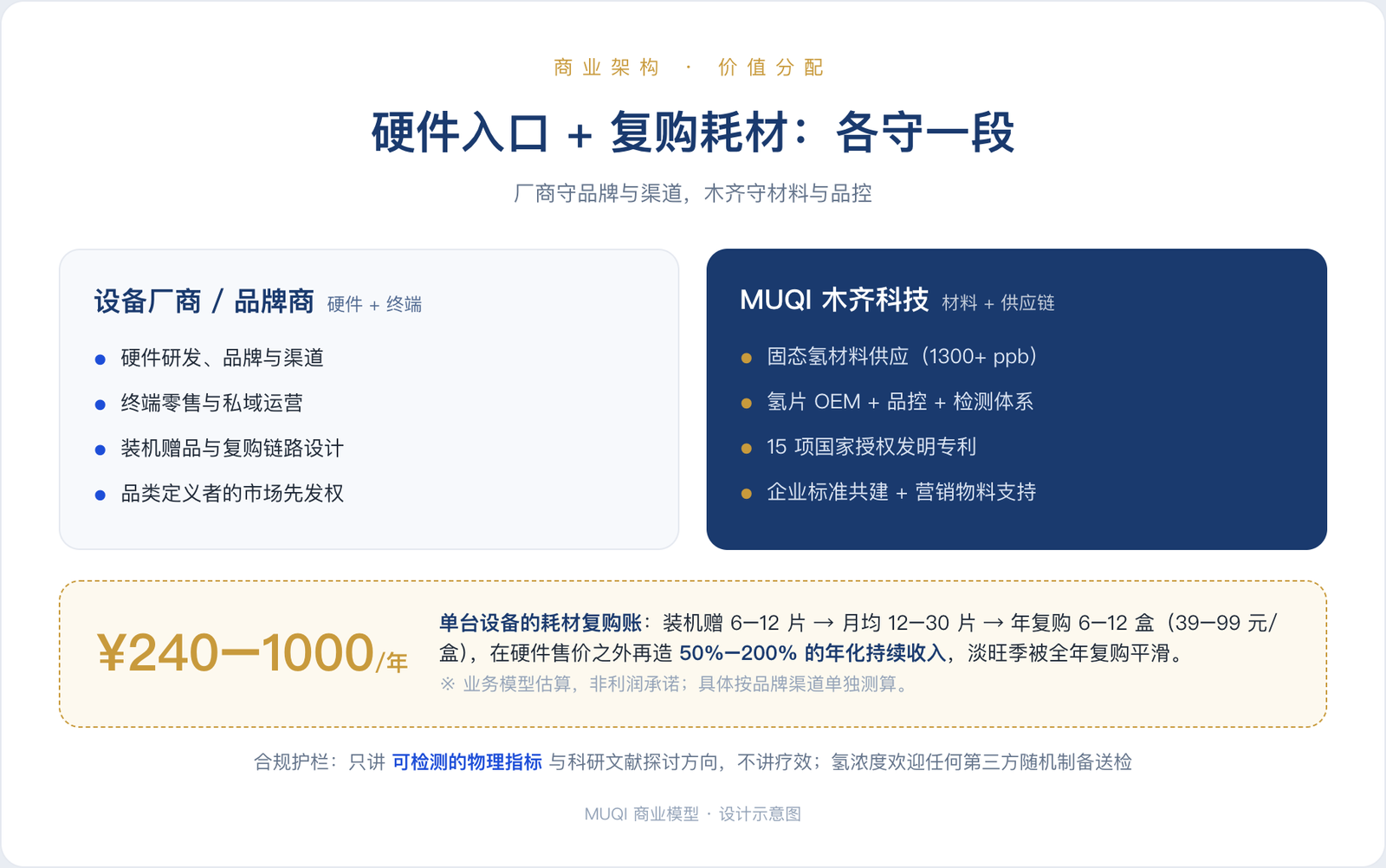
| Core Value Dimension | Appliance Brand / Channel Partner | MUQI Technology |
|---|---|---|
| Industrial Design, Branding & Retail Channels | ● | |
| Terminal Sales, Private Traffic & Consumable Retention | ● | |
| Solid-State Hydrogen Material Synthesis & Patent Licensing | ● | |
| Finished Tablet OEM Production, Quality Control & Cleanroom Packaging | ● | |
| Joint Enterprise Standards Filing & Structural Utility Patents | ○ | ● |
| Third-Party Safety Dossiers (SGS) & Scientific Educational Materials | ● |
The Consumable Unit Economics:
Taking a smart foot spa retailing at $59.99 as an example:
- Each unit ships with an introductory 1-box (12 tablets) trial pack at negligible BOM cost;
- Users soak an average of 8 to 12 times per month, depleting one box monthly;
- Each active unit generates replenishment orders of 6 to 10 boxes annually (at $7.99 to $13.99 retail per box);
- Each deployed device generates an additional $45 to $120 in high-margin consumable GMV annually;
- The hardware brand shifts from a volatile one-time appliance transaction to a smooth, predictable, high-margin annual recurring revenue stream.
7. Strategic Action Roadmap: A 3-Step Low-Risk Launch Plan
For appliance manufacturers, consumer wellness brand executives, or spa chain procurement directors, we recommend a rapid 3-step validation path:
Step 1: Validate with a Pilot SKU
No retooling and no disruption to existing production lines. Select a flagship foot bath model and replace the bundled low-grade herbal bag with a minimalist solid-state hydrogen tech tablet. Ship an initial run of 500 to 1,000 bundled units and track 8-to-12-week repeat replenishment rates in direct-to-consumer or private channels.
Step 2: Require Hard Data & Dissolved H₂ Curves
Reject vague marketing slogans. Ship a production prototype to MUQI Tech's research lab. Within 4 weeks, our engineering team will deliver a comprehensive Dissolved Hydrogen Release Profile & Water Quality Physicochemical Report under variable water volumes, temperatures, and circulation flow rates.
Step 3: Partner with the Proven R&D Source
Avoid uncertified effervescent packagers lacking materials science depth or proper extraction controls. MUQI Tech's 15-year research heritage and 15 invention patents are dedicated to one strategic objective: equipping every piece of your hardware with high-margin consumables worth repurchasing month after month.
8. Executive Summary Table
| Core Industry Question | Empirical Finding & Strategic Resolution |
|---|---|
| What went wrong with herbal foot bags? | Media testing revealed 100% of tested popular samples harbored severe mold, exceeding limits by up to 160x. A complete lack of mandatory national standards creates severe brand liability. |
| What is the hardware manufacturer's dilemma? | PID heating, massage rollers, and IoT connectivity have hit a ceiling; unit prices stay stuck at $35–$80, leaving zero post-sale customer value. |
| What does Western market data prove? | Amazon has validated the "Razor & Blades" model; the global Epsom salt market exceeds $2.8B; 1200 ppb hydrogen foot soak tablets are already actively sold. |
| Why is solid-state hydrogen the superior choice? | Zero electrical modification (no built-in electrolysis cell needed); crystal-clear water with zero residue; verifiable ppb concentration; transdermal absorption proven in published animal models. |
| What does MUQI Tech bring to the partnership? | 15 years of R&D, 15 invention patents, 1,800+ global clients; zero D2C competition; dedicated to materials supply, OEM delivery, and joint standard development. |
| What is the lowest-risk starting action? | Send a hardware sample to MUQI's lab to receive a full Dissolved Hydrogen Release Profile & Physicochemical Calibration Report within 4 weeks. |
🚀 Transform Your Foot Bath Hardware into a Recurring Revenue Machine
Whether you have existing production appliances ready for consumable bundling or are engineering a next-generation flagship with an integrated capsule chamber, MUQI Tech's engineering team is ready to deliver a customized feasibility assessment and sample kit within 7 business days.
Request Consumable Evaluation & Samples →Frequently Asked Questions (FAQ)
Q1: Why are traditional herbal foot soak bags becoming a brand liability for foot bath manufacturers?
A: Investigative media testing revealed that 100% of tested popular herbal foot soak bags contained high microbial loads, exceeding cosmetic microbial safety limits by up to 160 times. Traditional non-woven herbal bags suffer from dust, murky sediment, staining, pipe clogging, and an absence of mandatory national category standards. Bundling cheap, substandard herbal bags as complimentary gifts risks severe reputational damage and customer churn for premium appliance brands.
Q2: How does solid-state hydrogen achieve a zero-electrical-modification upgrade compared to built-in electrolysis?
A: Built-in electrolysis requires redesigning water-electric isolation chambers, adding proton exchange membranes (PEM) or titanium electrode plates, and re-undergoing expensive international safety certifications (CE, UL, CB, 3C), which drives retail prices to $300-$1000+. In contrast, solid-state hydrogen is delivered via external tablets or drop-in capsules directly into existing water cavities with zero tooling changes, eliminating electrical hazards while releasing 1200+ ppb pure molecular hydrogen instantly upon water contact.
Q3: How does the "Razor & Blades" consumable ecosystem expand customer lifetime value (LTV) for appliance brands?
A: By shifting from a one-time commoditized hardware sale ($35 to $80 retail with single-digit profit margins) to continuous consumable replenishment. With an average user soaking 8 to 12 times per month, each active machine drives recurring purchases of 6 to 10 consumable boxes per year ($7 to $15 per box), generating $45 to $120 in high-margin annual consumable gross merchandise value (GMV) per device.
Q4: What scientific evidence supports the transdermal absorption of molecular hydrogen in warm foot baths?
A: Peer-reviewed research by Iwai et al. (2023, Arch Med Sci Civil Dis) utilizing a pig immersion model demonstrated that dissolved hydrogen in bath water penetrates the stratum corneum and enters venous circulation, raising inferior vena cava blood H2 concentrations from ~0.7 ppb at baseline to ~46 ppb after 20 minutes of immersion. While published for mechanistic exploration and not intended as a disease treatment claim, it provides a solid physiological baseline for transdermal molecular hydrogen delivery.
Official B2B Inquiry & Engineering Access
Executive Contact: Martin Chen · CEO, MUQI Health Technology
Global Direct Business Email: muqizb@gmail.com
International Hotline / WhatsApp: +86 139 6441 6725
Official Global Portal: www.emuqi.com
Data Citations & Scientific Boundary Statement:
1. Media Testing Data: The finding that "9 tested foot soak samples contained fungal contamination exceeding limits by up to 160 times" is cited from investigative reports published by The Paper and Daddy Lab prior to World Consumer Rights Day 2025. This represents media sampling and does not constitute a mandatory national regulatory inspection announcement.
2. Commercial Market Projections: The global Epsom salt market CAGR and valuation estimates are cited from Mordor Intelligence public industry research reports.
3. Commercial E-commerce Disclosures: The 1200 ppb hydrogen output attributed to H2RICH tablets is derived from public product catalog disclosures on Amazon and does not serve as clinical endorsement.
4. Peer-Reviewed Academic Literature: Porcine transdermal hydrogen kinetics are cited from Iwai et al., Arch Med Sci Civil Dis 2023; micro-nano bubble antioxidant mechanisms are cited from Tanaka et al. 2021. These citations serve strictly for scientific mechanism discussion and do not constitute medical treatment claims or curative guarantees.
5. Intellectual Property & Standards: Invention patent references and enterprise standard filings are registered in public records of the China National Intellectual Property Administration (CNIPA) and the National Enterprise Standard Information Public Service Platform.