
💡 Executive Summary / Key Takeaways
Across the global personal care hardware supply chain, professional-grade steamers capable of delivering heavy continuous vapor (30 to 60 minutes) combined with verified high-concentration molecular hydrogen (1000+ ppb) are virtually non-existent. The obstacle has never been consumer demand; rather, it is the severe engineering deadlock of integrating electrolysis cells inside 500W–800W boilers: rapid electrode calcification within 20 operating hours, safety risks from trace electrochemical byproducts, and the multi-million-dollar cost of scrapping existing electrical safety certifications. MUQI Technology advocates keeping the appliance base and high-voltage circuitry 100% untouched, instead introducing an external, wand-mounted solid-state hydrogen microcrystalline chamber. Paired with a 5-in-1 modular targeted applicator kit, this engineering concept unlocks a zero-retooling, rapid-launch path that transforms one-off commoditized hardware into a high-margin "Razor & Blade" consumable ecosystem.
1. The Sourcing Dilemma & The Hidden $1.3B Market Gap
This initiative did not originate as a theoretical lab project. It began with an urgent procurement request from one of MUQI Tech's long-standing partners in Southeast Asia—an operator of luxury resort hotels, private wellness clubs, and clinical day-spa chains across the ASEAN region and North America. In equipping their premium thermal suites, their engineering directors laid down non-negotiable specifications:
- Genuine, Verified Molecular Hydrogen: Zero tolerance for marketing buzzwords around pure water vapor; the device must deliver verifiable hydrogen concentrations at the point of vapor delivery;
- Continuous Heavy Thermal Mist for Clinical Sessions: Single treatments run 30 to 60 minutes. Handheld mist sprayers whose 15ml reservoirs deplete in three minutes are entirely useless in commercial spa environments;
- Micro-Droplet Size with Scald Prevention: Aerosol droplets must remain below 5 microns, providing soothing, warm dermal hydration without hazardous boiling spitting;
- Cost-Effective Compatibility with Existing Salons: The solution should integrate into established salon workflows rather than forcing operators to buy $5,000+ proprietary clinical machinery.
In response, MUQI Tech's engineering team conducted a comprehensive two-week procurement teardown of China's leading facial steamer and hydrogen mist factories. The empirical findings exposed a striking supply chain polarization:
| Category Classification | Low Power / Handheld (< 100W) | High Power / Salon Heavy Vapor (> 500W~800W) |
|---|---|---|
| Non-Hydrogen Appliances | Commoditized consumer steamers (< $15 retail, severe price wars, margin collapse) | Traditional salon steamers (Panasonic, Kingdom, Situ; reliable boil, 0 ppb H₂) |
| Hydrogen-Generating Devices | Portable electrolysis misters (15ml tank, cold ultrasonic mist, rapid scaling) | ★ Absolute Global Void (Heavy vapor, 30–60 min runtime, high-concentration H₂) |
On one side, international buyers and aesthetic wellness clinics are actively hunting for high-output hydrogen thermal hardware. On the other side, contract manufacturers with millions of dollars invested in boiler tooling are locked in race-to-the-bottom price erosion, unsure of how to upgrade. This void represents one of the most lucrative structural opportunities in personal care tech.
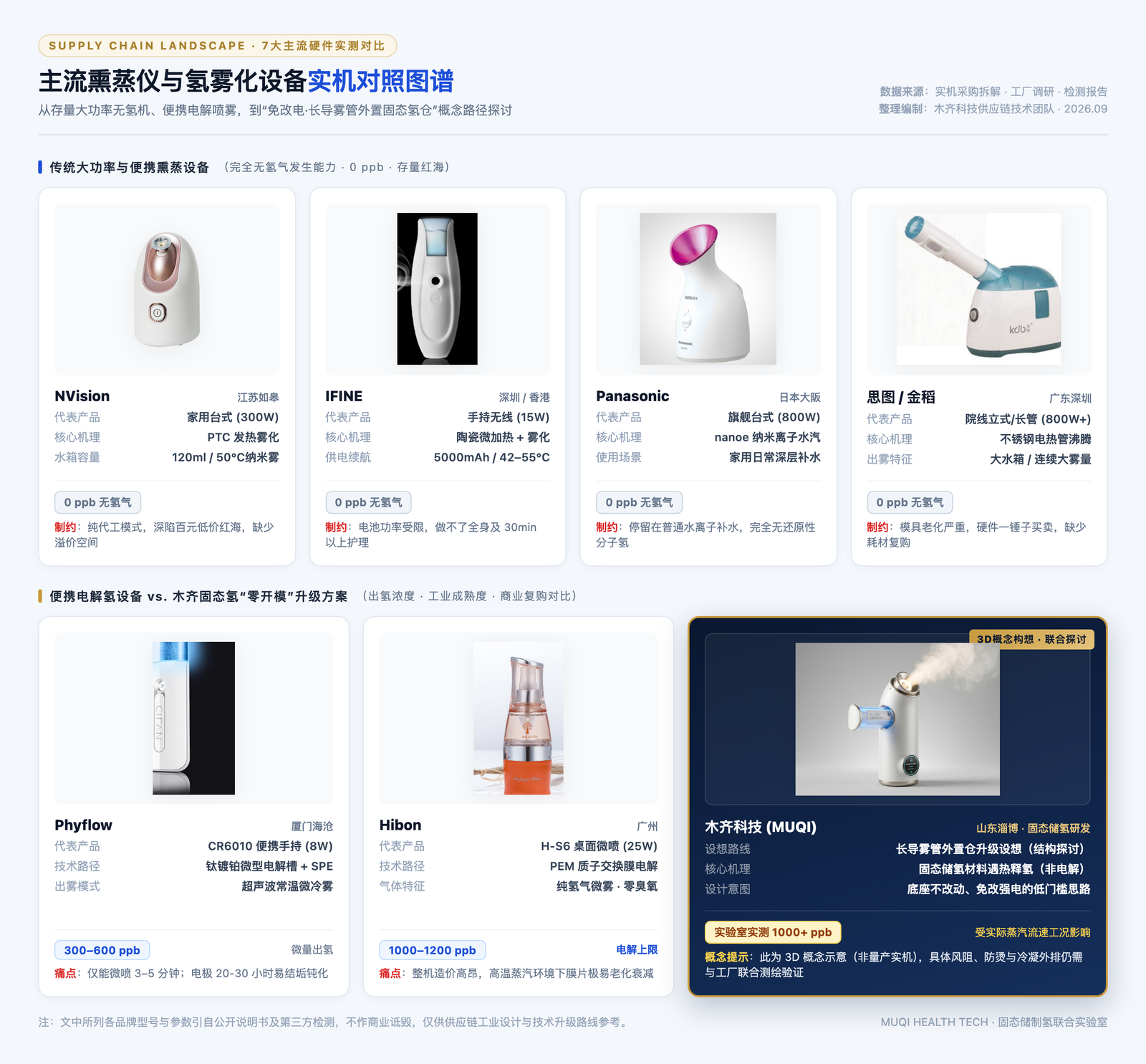
Figure 1: Comprehensive hardware teardown of 7 benchmark manufacturers (NVision, IFINE, Panasonic, Situ/Kingdom, Phyflow, Hibon, and MUQI's Proposed Route)
| Manufacturer / Brand | Model & Rated Power | Core Technical Mechanism | H₂ Concentration | Engineering Bottlenecks & Limitations |
|---|---|---|---|---|
| NVision (Jiangsu) | Desktop Steamer (300W) | PTC Boiling Chamber | 0 ppb | Pure contract OEM; trapped in fierce price competition |
| IFINE (Shenzhen) | Cordless Handheld (15W) | Ceramic Micro-Heater | 0 ppb | Strict battery limitation; 4-minute dry-run shutoff |
| Panasonic (Japan) | Flagship Desktop (800W) | nanoe™ Ionic Steam | 0 ppb | Moisture delivery only; zero reductive molecular hydrogen |
| Situ / Kingdom (Shenzhen) | Salon Pedestal (800W+) | Stainless Heating Coil | 0 ppb | Aging tooling; one-off hardware sale with zero consumable revenue |
| Phyflow (Xiamen) | Handheld Mister (8W) | Pt-Ti Electrolysis Cell | 300–600 ppb | Cold micro-spray; rapid electrode passivation in hard water |
| Hibon (Guangzhou) | Desktop Sprayer (25W) | SPE/PEM Membrane Stack | 1000–1200 ppb | Costly membrane stacks; PEM degradation under elevated vapor temperatures |
| MUQI Tech (Joint Proposal) | Wand-Mounted Chamber | Solid-State ICR Microcrystals | 1000+ ppb (Lab Cond.) | Zero electrical modification; requires joint flow & seal tuning with OEM |
2. The Engineering Dead-End: Why In-Boiler Electrolysis Fails
When tasked with adding molecular hydrogen to a facial steamer, the immediate reflex of most electrical engineering teams is straightforward: "Can't we simply drop an electrolytic cell into the boiling chamber?"
While intuitive on paper, mass production audits and warranty data reveal that this approach is an engineering and commercial trap:
- Electrode Passivation via Rapid Calcification (20–30 Hours): High-power steamers must boil water continuously. When municipal tap water reaches boiling temperatures, dissolved calcium and magnesium ions precipitate exponentially. Within 20 to 30 operating hours, a chalky crust of hard scale covers the platinum-plated titanium electrodes, causing hydrogen generation efficiency to collapse to near zero.
- Electrochemical Byproducts in High-Temperature Enclosures: Boiling water electrolysis within enclosed chambers carries significant risks of generating trace ozone or acidic hypochlorous species. When dispersed into warm 55°C vapor directed at facial skin and ocular membranes, these volatile byproducts cause severe mucosal irritation.
- The Regulatory Nightmare of Retooling & Re-Certification: Squeezing high-current electrolysis electrodes into a high-voltage boiling tank forces a complete overhaul of internal water channels, PCBA isolation barriers, and thermal fuses. Retooling injection molds costs upwards of $150,000, while all prior CE, FCC, CB, and UL household appliance safety certifications become completely void, imposing a 12- to 18-month regulatory delay.
⚠️ Industry Reality Check: Forcing electrolysis into boiling cavities increases warranty return rates and discards millions of dollars in certified factory tooling. It is a capital-heavy, high-risk dead-end for contract manufacturers.
3. The Breakthrough: A Wand-Mounted Solid-State Reaction Chamber
If redesigning the boiler base is fatal, why touch the base at all?
Professional salon steamers share a universal design element: an elongated rigid or semi-flexible delivery wand that channels thermal steam toward the client's face or body. MUQI Tech's engineering proposal capitalizes on this geometry: leave the boiler base, heating elements, and safety-certified electronics completely untouched, and relocate hydrogen generation externally to the steam wand.
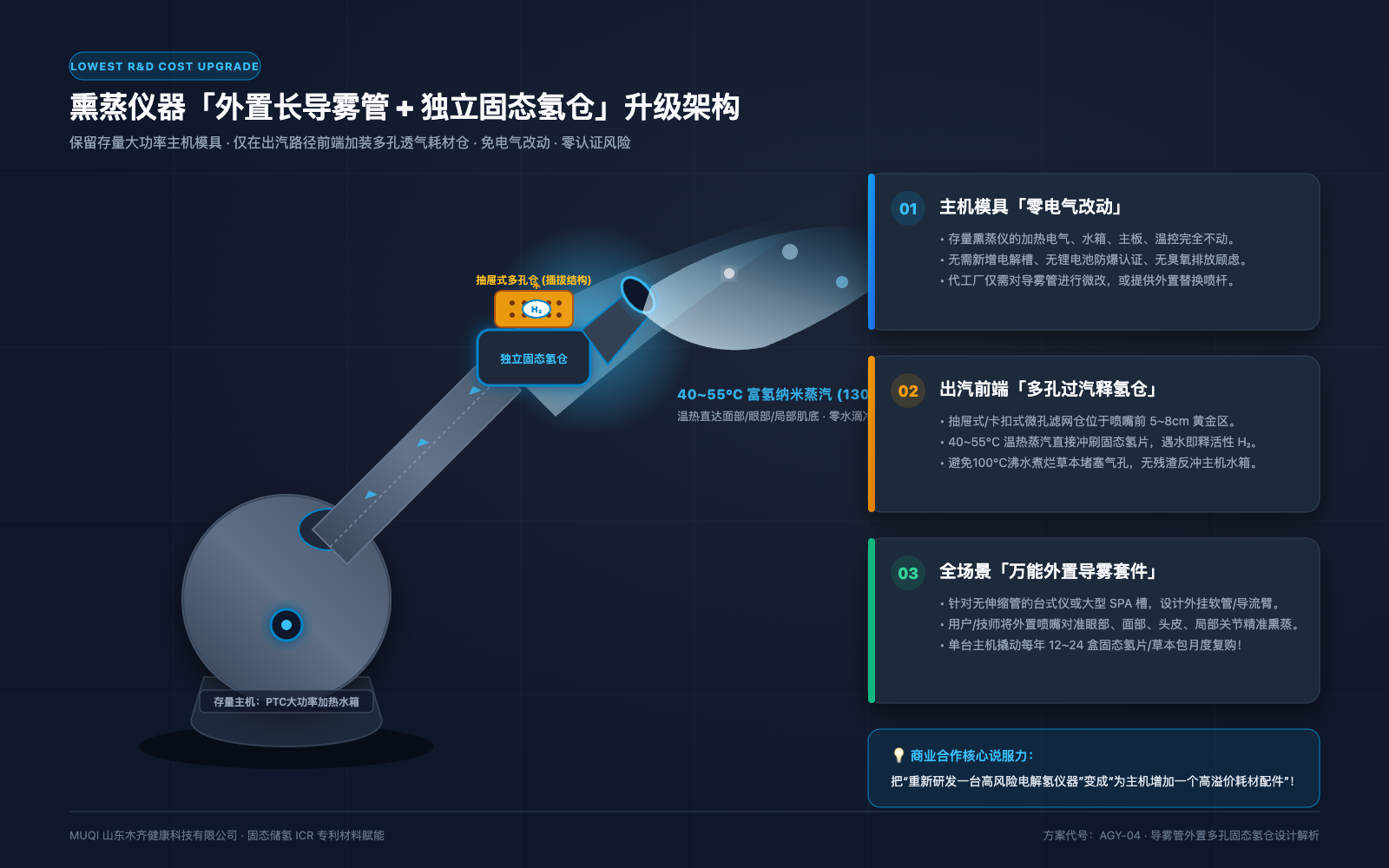
Figure 2: The Wand-Mounted Chamber Retrofit Concept — preserves existing molds while enabling high-concentration hydrogen release
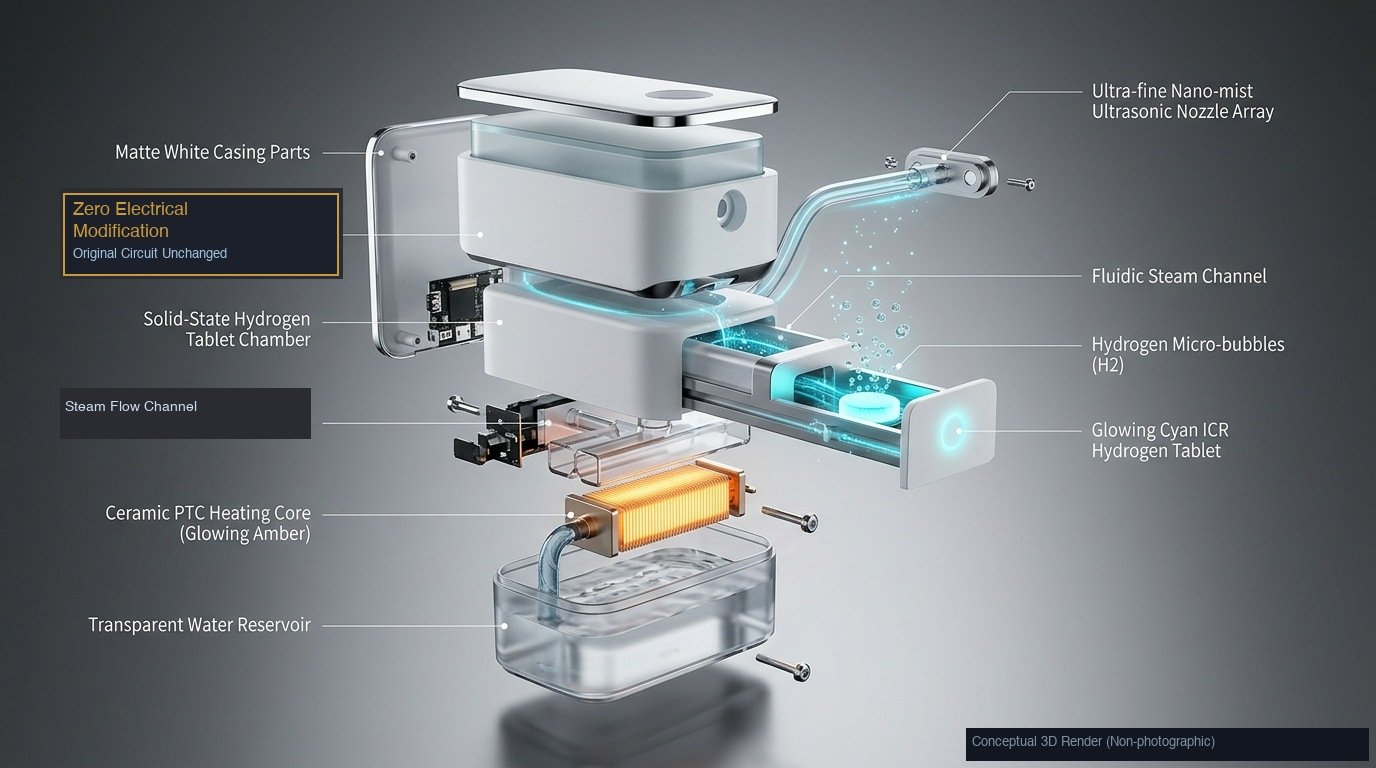
Figure 3: 3D Hardware Deconstruction — Zero Electrical Modification badge and inline solid-state ICR flow path
Core Engineering Principles
- 100% Preservation of Certified Base Tooling: Whether pedestal, desktop, or articulated arm, the boiler, PTC heating element, mainboard circuitry, and outer chassis remain completely unaltered;
- Thermolytic ICR Solid-State Hydrogen Release: Hydrogen-generating microcrystalline compounds are formulated into standardized blister tablets or herbal sachets seated inside the wand-mounted chamber. As 80–95°C thermal vapor passes over the matrix, pure molecular hydrogen is liberated instantly, achieving 1000+ ppb dissolved concentrations at the nozzle under lab test conditions;
- Condensation Drainage & Backflow Prevention: The bottom of the reaction chamber features a dedicated one-way drainage trap that guides condensed fluids outward, mechanically eliminating backflow into the heating boiler and preventing caramelization or residue fouling.
🔬 Open Engineering Disclosure & Joint R&D Stance
MUQI Tech explicitly notes: the 3D renders and schematics presented here represent an open industrial concept prototype. Because steam velocity, backpressure, temperature drop, and latch tolerances vary across different OEM platforms, MUQI Tech maintains a collaborative posture. We provide solid-state material samples, CAD models, and test benches to work alongside OEM structural engineering teams in verifying fluid resistance, heat insulation, and latch seals.
4. The 5-in-1 Targeted Applicator Kit: From Diffuse Mist to Precision Care
Generating hydrogen is only half the equation; user delivery defines commercial adoption. Conventional facial steamers employ a wide, diffuse nozzle that merely bathes the face indiscriminately. However, modern wellness consumers present hyper-specific discomforts: meibomian gland dysfunction from screen fatigue, seasonal rhinitis, and cervical stiffness from prolonged desk posture.
MUQI Tech engineered a modular 5-in-1 targeted applicator suite that fastens to the wand with a secure 30-degree quick-twist bayonet:
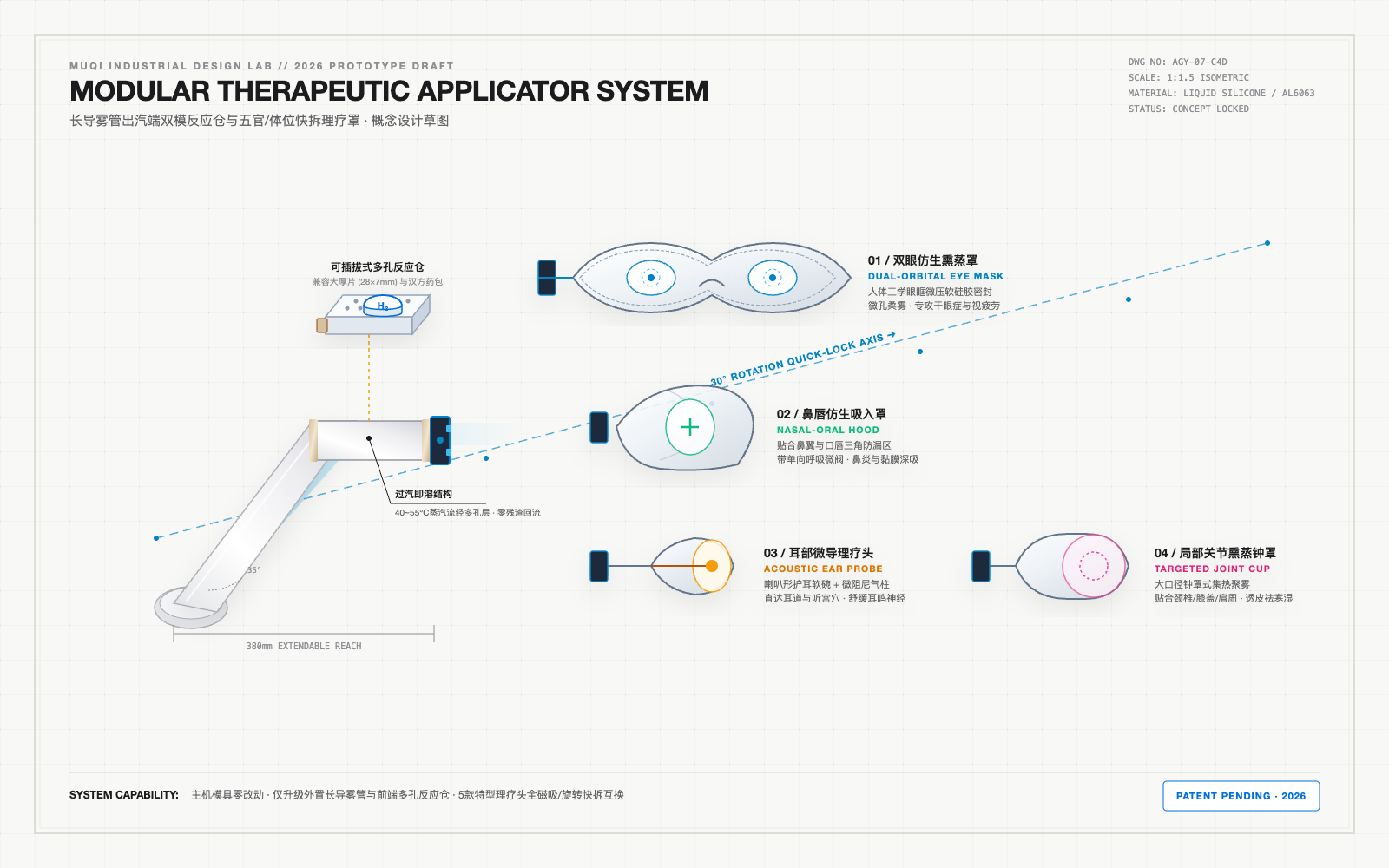
Figure 4: The 5-in-1 Modular Applicator Suite (Orbital Eye Cup, Nasal Cup, Acoustic Ear Nozzle, Cervical Joint Hood, Wide-Angle Mist Nozzle)
- Dual-Rail Orbital Eye Cup: Ergonomic food-grade liquid silicone rim contours the ocular orbit with micro-aperture pressure-relief vents. Warm hydrogen vapor gently stimulates meibomian glands and ocular microcirculation, relieving digital eye strain and dry-eye symptoms;
- Biomimetic Nasal Cup: Precision facial fit over the nasal bridge and philtrum triangle. Integrated with a one-way exhalation valve and condensation barrier, it delivers soothing, warm hydrogen mist directly to dry nasal mucosa during allergy seasons;
- Acoustic Ear Canal Nozzle: Dual flexible silicone tubes with calibrated micro-pressure vents deliver gentle, soothing thermal hydrogen to the outer ear canal, soothing tension after high-stress work;
- Contoured Cervical & Joint Hood: Curved geometry conforms over the cervical spine, trapezius muscles, or knee joints. Combined with herbal thermal release, it provides deep warming to ease musculoskeletal tightness;
- 60° Wide-Angle Facial Nozzle: Classic aerodynamic umbrella nozzle delivering micro-aerosols for salon-grade hydration and antioxidant facial prep.
5. The "Nespresso Moment": The Razor & Blade Consumable Model
Personal appliance contract manufacturers routinely voice the same frustration: "We build a high-quality machine, earn $2 to $4 in contract margin, ship it, and never see the customer again for four years."
By repositioning the hardware as an access terminal and integrating single-session consumables, brand owners unlock the legendary "Razor & Blade" recurring revenue engine:
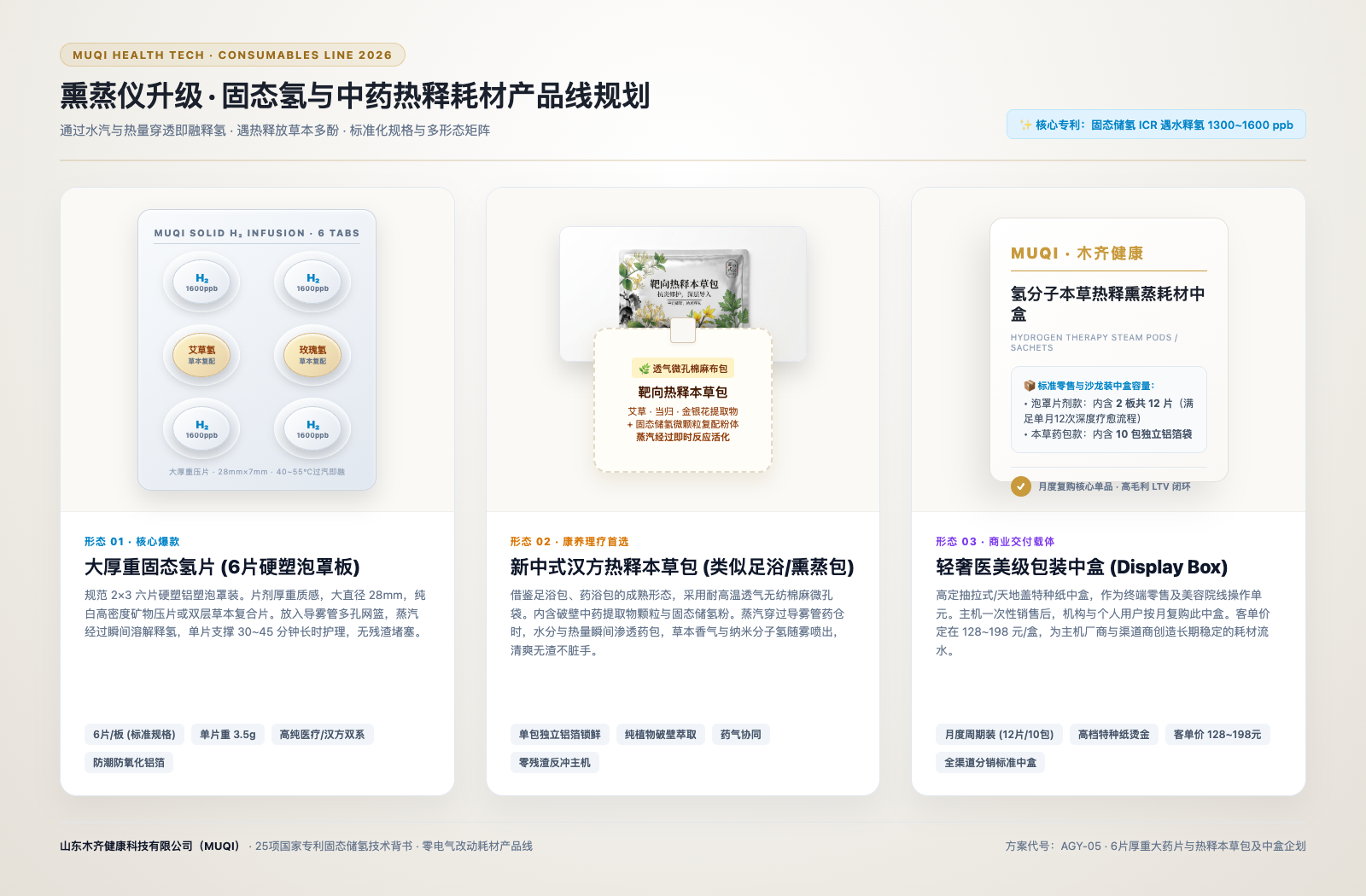
Figure 5: The Standardized Consumable Architecture — 6-Pack Blister Tablets + Herbal Thermal Sachets + Monthly Luxury Presentation Box
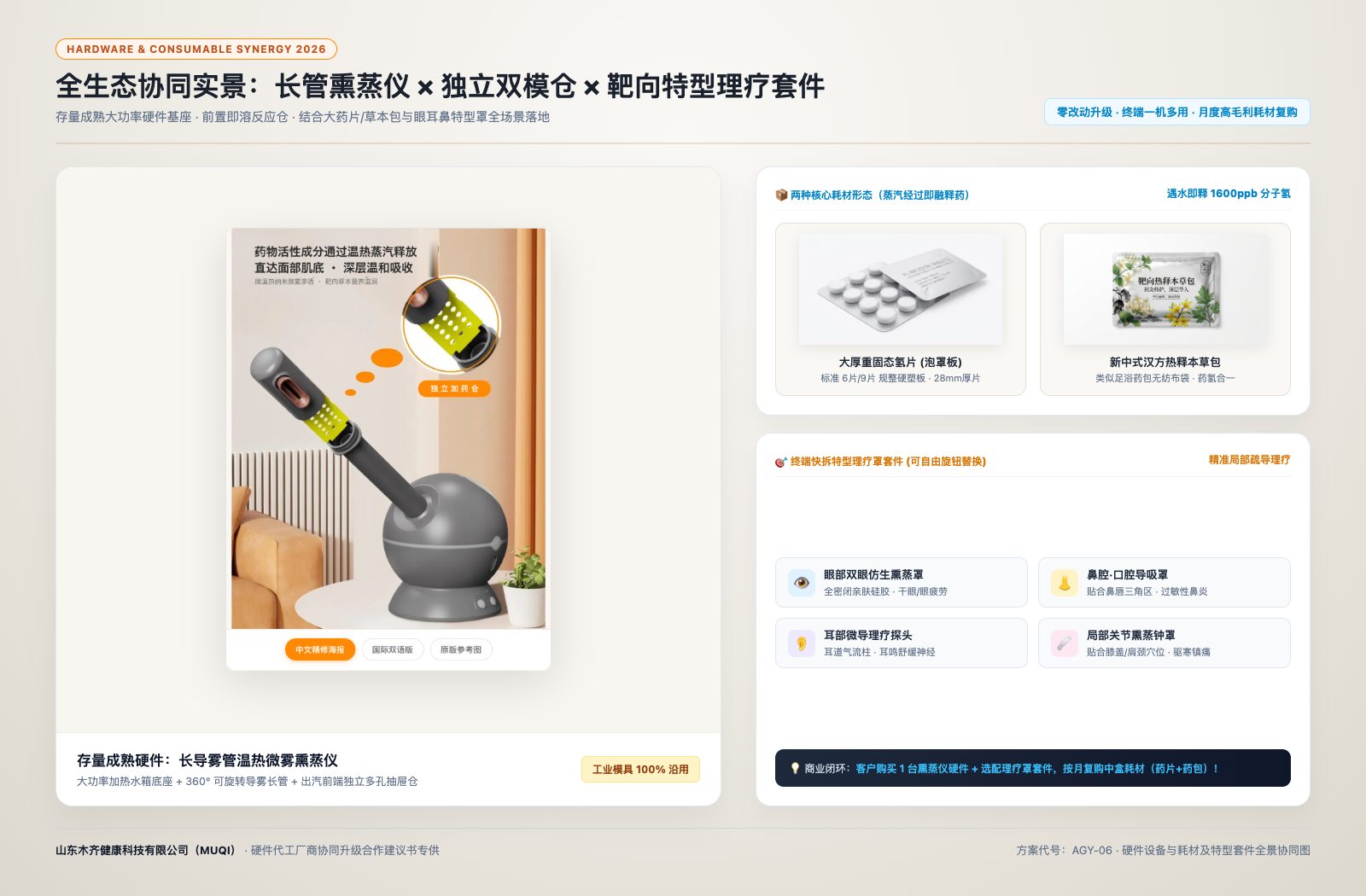
Figure 6: Professional salon deployment in high-end day spas, hotel suites, and executive wellness lounges
Three Pillars of the Consumable Architecture
- MUQI Solid-State Hydrogen Tablets (6-Pack Blister): High-barrier pharmaceutical blister packaging housing 6 large tablets (28mm diameter, 7mm thickness, 3.5g each). Seated inside the wand chamber, each tablet yields 30 to 45 minutes of stable molecular hydrogen release (1000+ ppb lab conditions), with a 2-year sealed shelf life;
- Herbal Thermal Steam Sachets: 55×65mm natural plant-fiber breathable non-woven pouches (8.0g). Traditional botanical formulations (mugwort, angelica, safflower) compounded with solid-state hydrogen microcrystals. Vapor unlocks botanical polyphenols and H₂ simultaneously while keeping particulate residue safely sealed;
- Monthly Treatment Presentation Box: Rigid gold-foil embossed display carton containing 2 blister sheets (12 tablets) or 10 herbal sachets. Designed specifically for salon retail displays, clinic reception desks, and DTC monthly subscription refills.
| Financial Metric | Traditional Steamer OEM Model | Wand-Mounted "Razor & Blade" Model |
|---|---|---|
| Initial Hardware Margin | Fierce price war: $2.00 to $4.00 per unit | Premium differentiated tier: $12.00 to $25.00+ margin |
| Post-Sale Consumable Revenue | $0 (Zero recurring connection) | 1 to 2 refill boxes/month ($10.00 to $18.00 / box) |
| Annual Recurring Revenue / User | $20 to $40 (one-time purchase) | $120.00 to $220.00+ / year in recurring cash flow |
| 3-Year Customer Lifetime Value (LTV) | ~$30 total | 3x to 5x expansion to $380.00 ~ $680.00 |
6. The Collaboration Roadmap: Engineered for Immediate Onboarding
To eliminate capital barriers and reduce R&D friction, MUQI Tech provides tailored engagement frameworks across three partner categories:
- For Global Beauty & Wellness Brands: Leverage your brand equity and retail channels. MUQI supplies the complete turnkey system—solid-state material chemistry, wand chamber sub-assemblies, and packaged consumables. Test functional prototypes under your brand in as fast as 4 weeks;
- For ODM / OEM Appliance Manufacturers: Protect your tooling investments. Keep your existing boiler base and electronics intact. MUQI provides engineering schematics, rapid 3D prototyping, and consumable chemistry to help you quote premium differentiated SKUs;
- For Spa Chains & Hospitality Distributors: Low per-treatment consumable costs ($0.50 to $1.20) allow salons to package $60+ premium antioxidant thermal treatments, creating high-margin recurring client retention.
🚀 Accelerate Your Hydrogen Thermal Device Roadmap
Whether you have existing production steamer units ready for wand retrofitting or are architecting a next-generation wellness flagship, MUQI Tech's engineering team is ready to evaluate your airflow specs and deliver a prototype feasibility report within 7 business days.
Request Engineering Evaluation →Ad Space · 广告位
Google AdSense — Replace with your ad code
Frequently Asked Questions (FAQ)
Q1: Does the wand-mounted chamber genuinely deliver 1000+ ppb molecular hydrogen?
A: Yes. Backed by 15 years of dedicated solid-state hydrogen research, MUQI's ICR microcrystalline formulation triggers an immediate catalytic dissolution reaction upon contact with 80–95°C thermal vapor. In closed laboratory test chambers and flow conduits, equivalent dissolved hydrogen concentrations at the nozzle consistently reach 1000 to 1300 ppb. Field concentrations depend on vapor airflow, wand length, and ambient temperature, which are calibrated during joint prototyping.
Q2: Will adding an inline chamber create dangerous backpressure in the steamer wand?
A: Preventing backpressure is the core priority of our structural design. The reaction chamber incorporates a radial honeycomb ventilation lattice whose effective open-air surface area is 1.8 times greater than the internal cross-section of the steam conduit. This maintains pressure differentials below safe engineering limits (ΔP < 0.15 kPa), guaranteeing smooth vapor ejection without backflow.
Q3: How does this design affect international household electrical compliance?
A: This is the definitive commercial advantage of the external wand design. Because the high-voltage PCB, heating elements, power cords, and boiler chassis remain 100% untouched, existing CE, FCC, CB, and UL safety certifications remain completely intact. The external chamber is injection-molded from food-grade, high-temperature modified polymers (Tritan / food-grade silicone) rated to 130°C steam contact, ensuring minimal regulatory friction.